Pacemaker and ICD interrogations into NextGen
Cardiology device clinics drown in programmer output. Biotronik, Medtronic, and St. Jude (and the rest of the IHE IDCO world) emit HL7 observation messages (implantable pacemakers, ICDs, CRT devices, loop recorders) that the EHR will not file on its own. Staff print PDFs. Discrete battery, lead, and therapy data never lands on the chart.
We built a Mirth Connect channel that watches for those *.hl7 IDCO files, parses MSH/PID/OBR/OBX, matches the patient in NextGen, distinguishes remote monitor traffic from in-clinic interrogations, and writes discrete observations plus a clinical encounter the device clinic can work. A companion path produces the report PDF when the workflow still needs a document. Manufacturers are normalized (not left as a suffix on a name field). Lead positions (RA, RV, LV) are mapped so the template is not a blank grid.
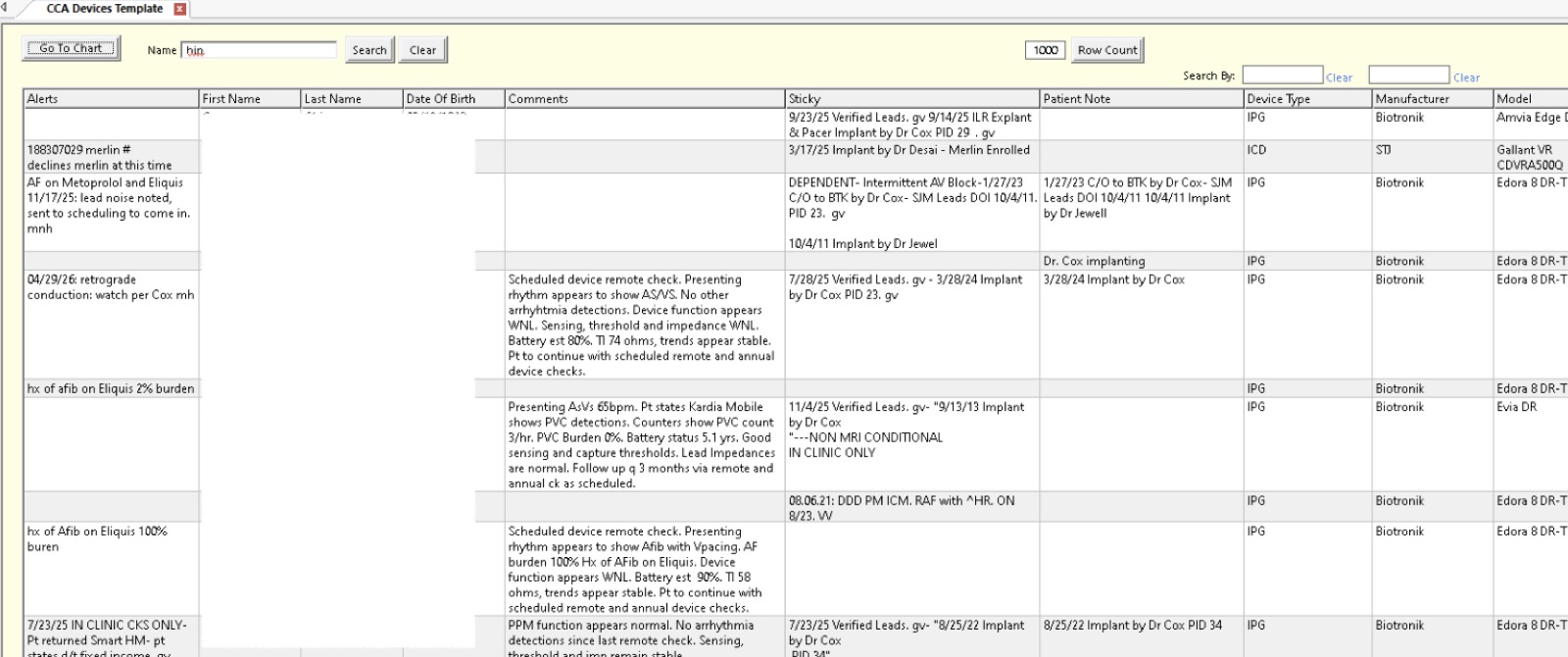
If an abnormal or out-of-range interrogation comes in, a reading the device clinic has to act on, it shows on the pacemaker dashboard, and a NextGen task goes to a nursing task group so someone follows up with the patient. Routine interrogations file quietly. The ones that need a callback do not sit in a share folder.
The point is not “we know HL7.” It is that the next interrogation is in the chart before the patient is out of the parking lot.